
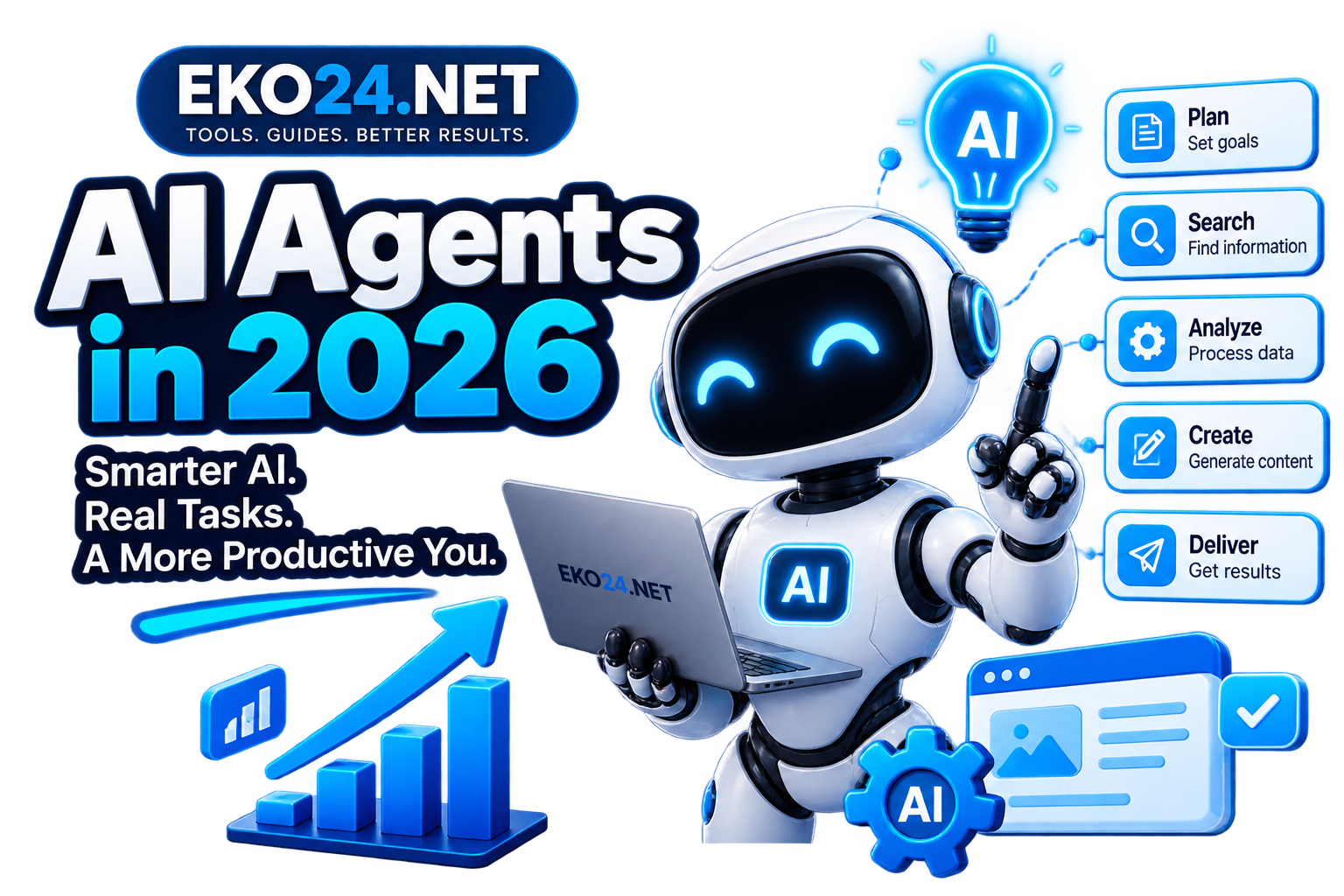
AI chatbots and AI tools made generative AI familiar to millions of people. In 2026, the conversation is moving beyond systems that simply answer a prompt. The new focus is AI agents: systems designed to work toward a goal, use tools and carry out several connected steps with less constant direction from a person.
This shift does not mean every AI tool is suddenly autonomous. Agents vary widely in what they can do and how much human approval they require. Understanding that difference makes it easier to see why businesses and technology companies are investing so heavily in agentic AI.
What Is an AI Agent?
An AI agent is a software system that can interpret a goal, decide what steps may be needed, use available tools or information and take actions toward completing the task. Many modern agents are built around large language models, but the model is only one part of the system.
A useful way to think about the difference is this: a chatbot mainly responds to what you ask, while an agent may continue working through a sequence of tasks after receiving the goal.
Why Are AI Agents Getting So Much Attention in 2026?
The main change is that AI is moving from isolated prompts toward workflows. Instead of asking an assistant to summarize one document and then manually performing the next five steps, an agent can potentially coordinate several parts of the process.
That transition is already visible in enterprise technology. Google Cloud describes 2026 as a move from one-off AI tasks toward systems that orchestrate end-to-end workflows. Microsoft has also reported rapid growth in active agents within its Microsoft 365 ecosystem.
How Does an AI Agent Work?
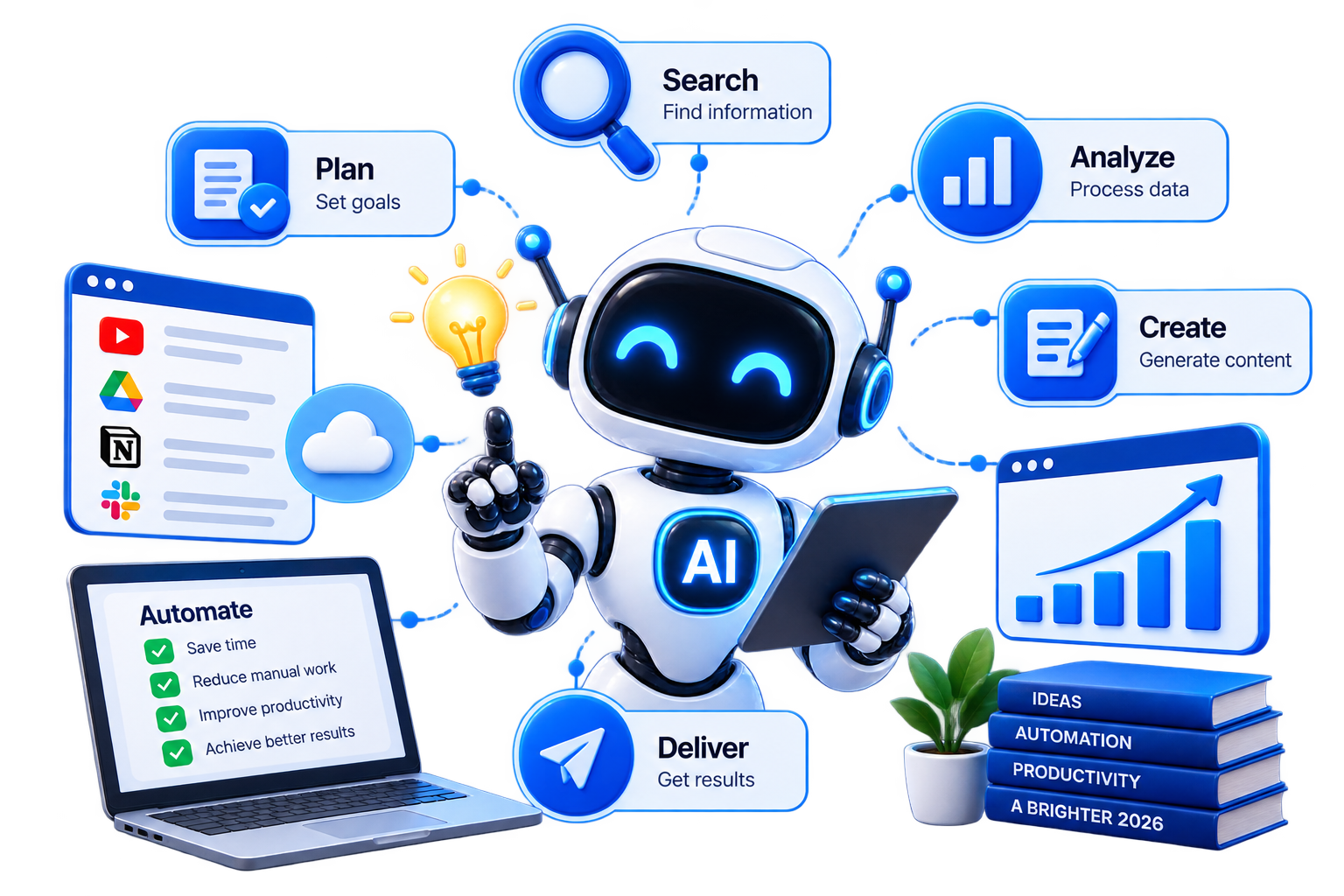
There is no single architecture used by every agent, but many agentic workflows follow a similar cycle. The system receives a goal, examines the available context, plans one or more actions, uses tools when necessary and evaluates the result before deciding what to do next.
- Goal: the user or system defines what should be achieved.
- Reasoning and planning: the agent determines possible next steps.
- Tools: it may search information, read files, call APIs or interact with other software.
- Action: it performs an allowed step instead of only suggesting one.
- Evaluation: the result can be checked before the workflow continues or returns to a person.
This ability to combine reasoning with actions is what separates an agentic workflow from a simple fixed automation script.
AI Agents vs. Traditional Chatbots
A traditional chatbot usually follows a conversational pattern: you ask something, it generates a response, and then it waits. An AI agent can be designed to maintain a goal across multiple steps and interact with external systems.
For example, a chatbot might explain how to research competitors. An appropriately connected agent could potentially gather permitted data, organize the findings, create a summary and prepare a draft report. The exact capabilities depend on the tools, permissions and safeguards provided to it.
Where Are AI Agents Being Used?
Current enterprise use cases include customer support, software development, security operations, research and internal business processes. Agents can also help with repetitive work such as gathering information from several sources, summarizing documents or preparing standardized material. For simpler document tasks, EKO24.NET also offers an AI Summarizer and an AI Paraphrasing Tool.
Some organizations are exploring multi-agent systems as well. In these systems, different specialized agents cooperate on parts of a larger workflow rather than expecting one agent to handle everything.
Why Human Oversight Still Matters
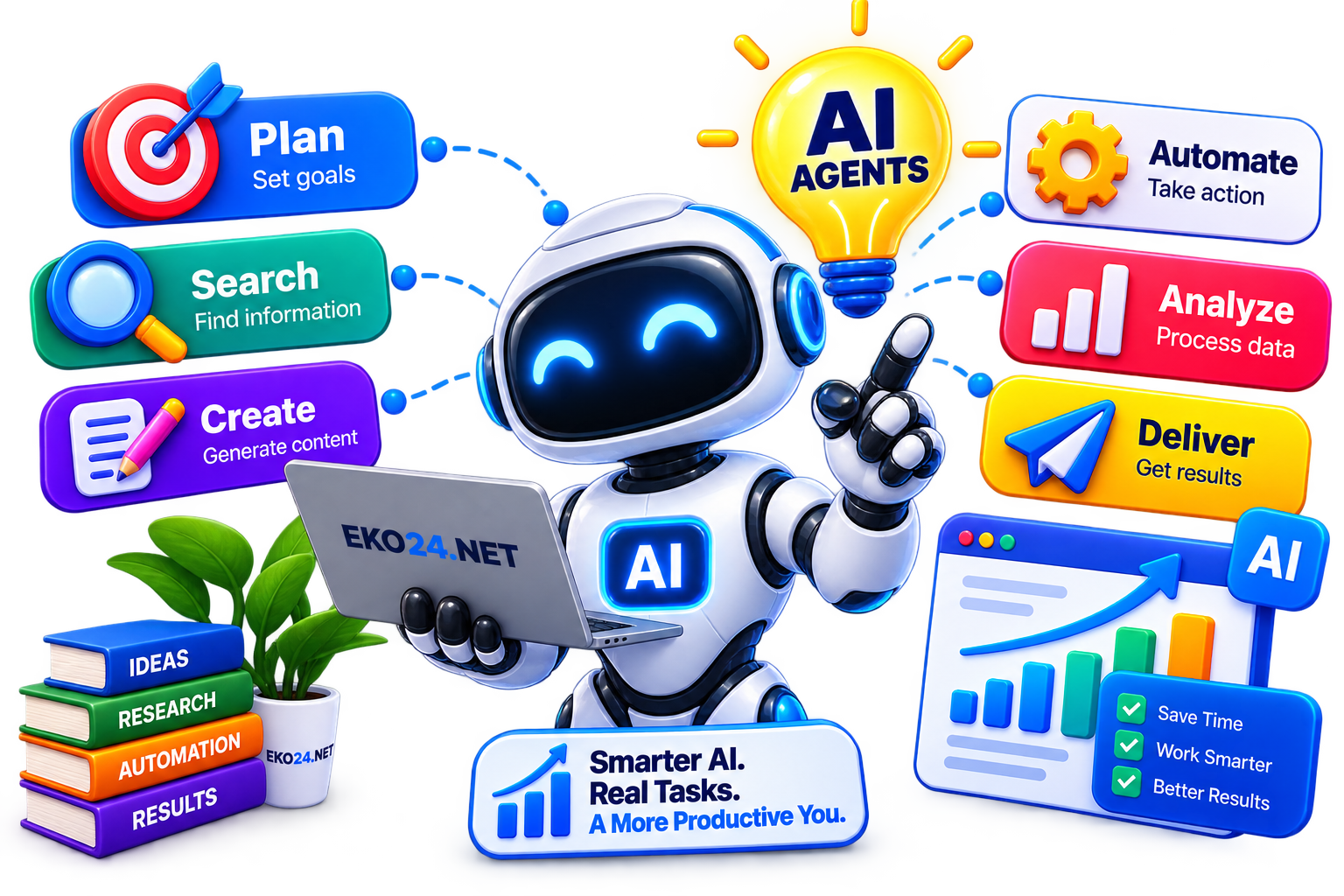
More autonomy does not make an AI system automatically reliable. An agent can misunderstand a goal, use incomplete information or take an inappropriate action if its permissions and instructions are poorly designed.
For important tasks, organizations therefore need clear boundaries around what an agent can access and which actions require approval. Human review remains especially important when decisions involve money, sensitive information, security or other high-impact consequences.
The Security and Privacy Challenge
Agents introduce a different security problem from ordinary chat interfaces because useful agents may be allowed to read data and call external tools. The more access an agent receives, the more carefully that access needs to be controlled.
Security teams are paying particular attention to permissions, identity, monitoring, prompt injection and third-party connections. EKOEKO24.NET 's Security & Privacy Tools also provide practical utilities for everyday account and web safety. The practical goal is not to give an agent unlimited access, but to provide only the resources required for its job and maintain appropriate guardrails.
Will AI Agents Replace Apps and Employees?
Claims that agents will immediately replace traditional software or entire workforces are too broad. Many existing applications provide predictable interfaces and specialized functions that remain useful. Agents may increasingly operate across those applications rather than simply replacing them.
The workplace picture is also more complicated than direct replacement. Microsoft's 2026 Work Trend Index describes growing use of agents alongside people and emphasizes human direction and ownership of outcomes. Different occupations and organizations are likely to adopt this technology at very different speeds.
What to Watch Next
The important question is shifting from whether an AI agent can complete an impressive demonstration to whether it can operate reliably in everyday work. When experimenting with instructions for AI systems, the AI Prompt Generator can also help users structure clearer prompts. That puts more attention on testing, permissions, monitoring, interoperability and the quality of the data available to the agent.
Another area to watch is collaboration between agents. If standards make it easier for specialized systems to communicate securely, a single workflow could involve several agents from different services. That could make agentic systems more useful, but it also increases the need for clear accountability.
For readers who want to explore these ideas in practice, eko24.net also provides free AI tools for writing, summarizing, prompting, and everyday content workflows.
Frequently Asked Questions
Is an AI agent the same as a chatbot?
No. The terms sometimes overlap, but an agent generally has a stronger focus on pursuing goals and taking actions across multiple steps, while a basic chatbot mainly responds within a conversation.
Can AI agents work completely on their own?
Some systems can perform parts of a workflow with limited intervention, but autonomy is not all-or-nothing. Real deployments can require approval before sensitive or consequential actions.
Do AI agents need access to other tools?
Not every agent needs the same integrations, but tool access is a major part of what makes agents useful. Depending on the task, an agent may need access to databases, APIs, files, browsers or business applications.
Are AI agents safe?
Safety depends heavily on design, permissions, data, monitoring and the task itself. Giving an agent unnecessary access can create additional risk, so organizations are increasingly treating governance and security as core parts of deployment.
Final Thoughts
AI agents are attracting attention in 2026 because they represent a practical shift from AI that mainly generates answers to AI that can participate in workflows. Their potential comes from combining language-model capabilities with planning, tools and actions.
The technology is still evolving, and the most useful agents will not necessarily be the ones with the greatest autonomy. Reliability, appropriate human control and clearly defined permissions may matter just as much as how many tasks an agent can perform.