
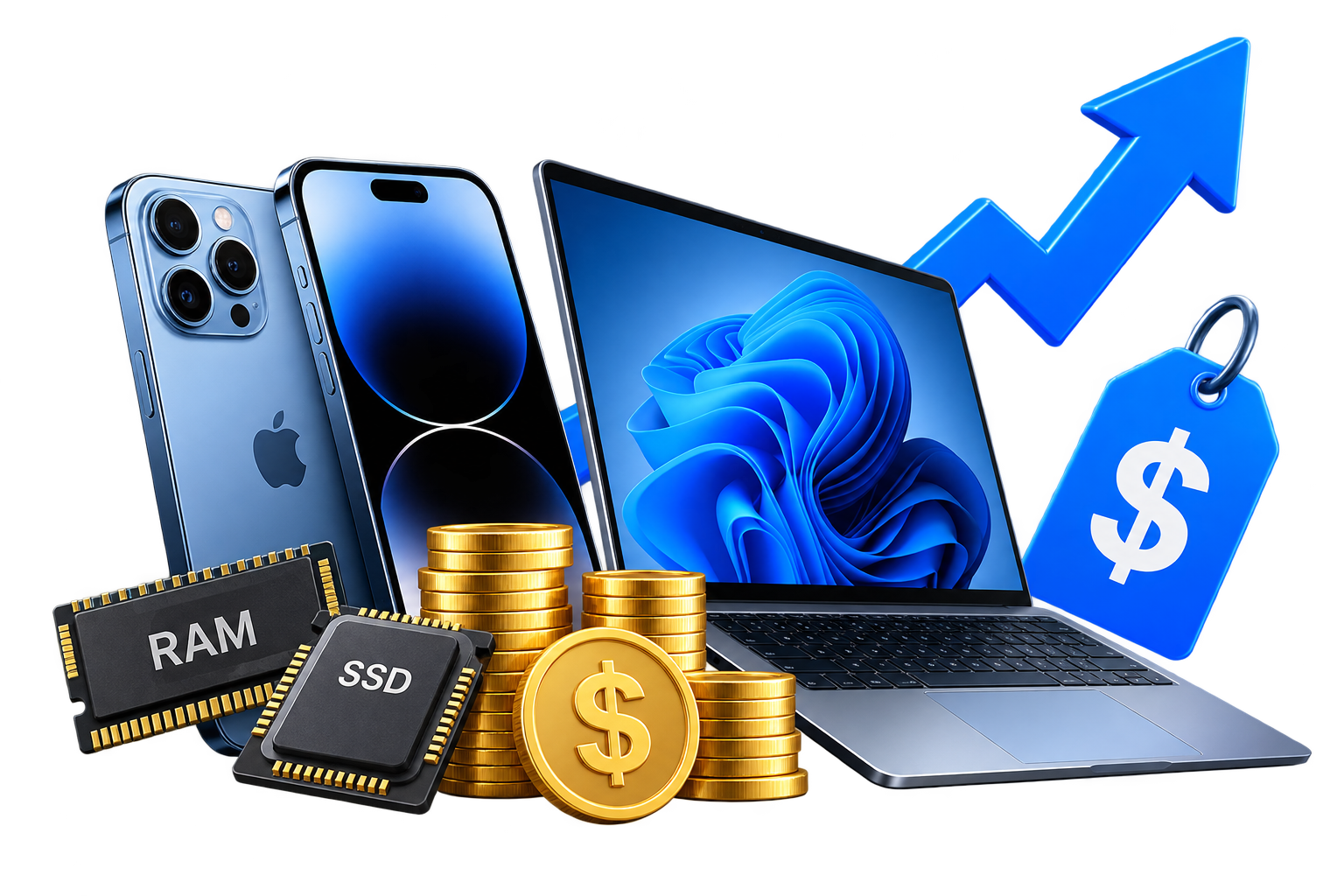
Buying a new smartphone or laptop is becoming noticeably more expensive. Even devices that once sat comfortably in the budget or mid-range category are moving upward in price, while premium models continue to push higher.
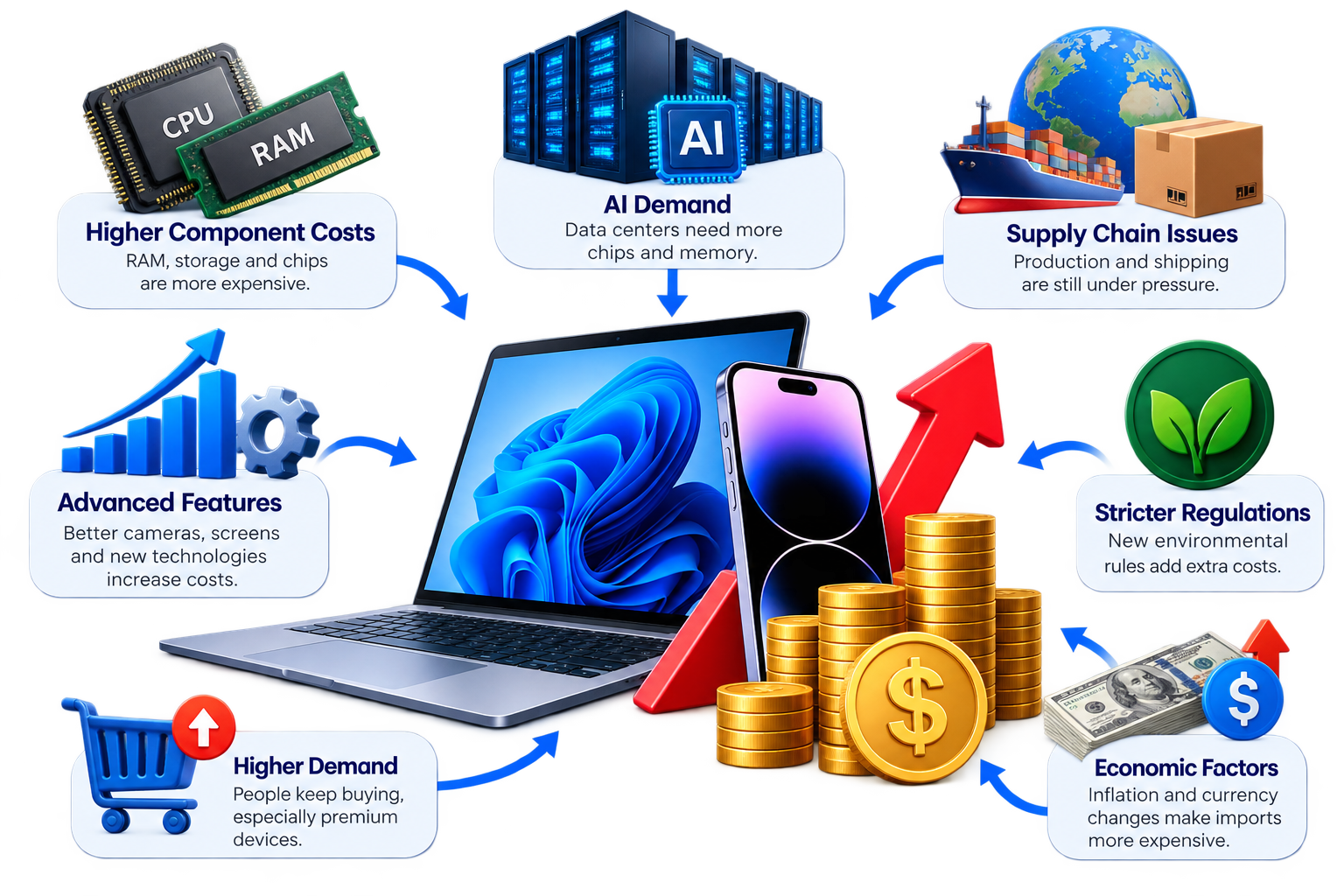
This is not caused by one company or one component. A combination of more expensive memory, strong demand from AI infrastructure, higher hardware requirements, and changes in the way manufacturers build their product ranges is putting pressure on device prices.
Memory Has Become a Much Bigger Cost
RAM and storage are essential parts of every modern phone and computer. When DRAM and NAND flash become more expensive, manufacturers eventually have to absorb the increase, reduce specifications, or pass part of the cost to buyers.
Recent industry data shows that memory prices have risen sharply. This matters especially for affordable devices, where profit margins are already small. A relatively modest increase in component cost can make a cheap laptop or smartphone much harder to sell profitably.
That pressure is already reaching retail products. Instead of simply accepting lower margins, manufacturers may increase prices, offer fewer low-cost models, or change the amount of RAM and storage included at a given price.
AI Is Competing for Hardware Supply
The rapid expansion of AI data centers is another important part of the story. AI servers require huge amounts of high-performance memory and storage. Suppliers naturally prioritize markets where demand and margins are strongest.
As more manufacturing capacity is directed toward servers and AI-related hardware, less capacity can be available for traditional consumer products. TrendForce has reported that this shift is helping keep memory supply tight for PCs and smartphones.
This does not mean that every price increase is “because of AI.” It means AI infrastructure has become a major new source of demand in an already complex semiconductor market.
Budget Devices Feel the Pressure First
Premium phones and laptops usually have enough margin for manufacturers to absorb some component increases. Budget products do not have that flexibility.
This is why the lower end of the market can be affected more severely. A manufacturer may decide that selling a very cheap device is no longer worthwhile, then replace it with a slightly more expensive model.
For consumers, the result can look like a simple price increase even when the real change is that fewer genuinely inexpensive choices remain available.
New Devices Also Include More Hardware
Component inflation is only part of the explanation. Modern devices are becoming more capable. Phones now commonly include multiple cameras, brighter high-refresh displays, larger batteries, faster processors and more memory. Laptops are adding better displays, faster SSDs, improved graphics and dedicated hardware for AI features.
Those improvements can make a new generation more expensive to manufacture. At the same time, buyers increasingly expect devices to last longer, receive software updates for more years and handle heavier applications.
That makes direct price comparisons with older generations less straightforward: sometimes the price is higher because the underlying product has also changed.
Should You Wait Before Upgrading?
If your current phone or laptop still performs well, there may be little reason to replace it simply because a new generation has arrived. Longer upgrade cycles can make more sense when hardware prices are elevated.
Before buying, compare the specifications that actually matter to you rather than focusing only on the model year. RAM, storage, battery life, display quality, repairability and expected software support can matter more than having the newest processor.
Refurbished and previous-generation devices can also offer better value, although prices in those markets can move when demand for new products changes.
Readers comparing technology and creator hardware can find more practical guides in the eko24.net Tech & Creator Blog.
Will Prices Come Back Down?
Some component prices can eventually ease as manufacturers expand capacity or demand changes. However, that does not guarantee that retail prices will return to their old levels. Product mixes, specifications, manufacturing costs and consumer expectations also change over time.
The more useful approach is to judge each device by the value it offers when you actually need to buy, rather than waiting indefinitely for the entire market to become cheaper.
FAQ
Why are smartphones becoming more expensive?
Higher memory costs, tighter component supply, more advanced hardware and a shift toward higher-priced models can all contribute to rising smartphone prices.
Why are laptops affected too?
Laptops rely on DRAM, SSD storage and other semiconductor components that are facing similar cost pressures. Manufacturers may eventually pass some of those increases into retail prices.
Is AI the only reason for higher prices?
No. AI infrastructure is an important source of semiconductor demand, but device pricing also depends on component supply, specifications, manufacturing costs, product strategy and market conditions.
Final Thoughts
Higher smartphone and laptop prices are the result of several forces arriving at the same time. Expensive memory is currently one of the clearest pressures, while AI infrastructure is changing where semiconductor capacity is being used.
For buyers, this makes careful comparison more important than automatically purchasing the newest model. A well-chosen previous-generation, refurbished or mid-range device may provide most of the performance you need without paying the highest current price.