1837
Analytical Engine design
Charles Babbage described a design for a programmable mechanical general-purpose computer. The machine was not completed in his lifetime.
computing

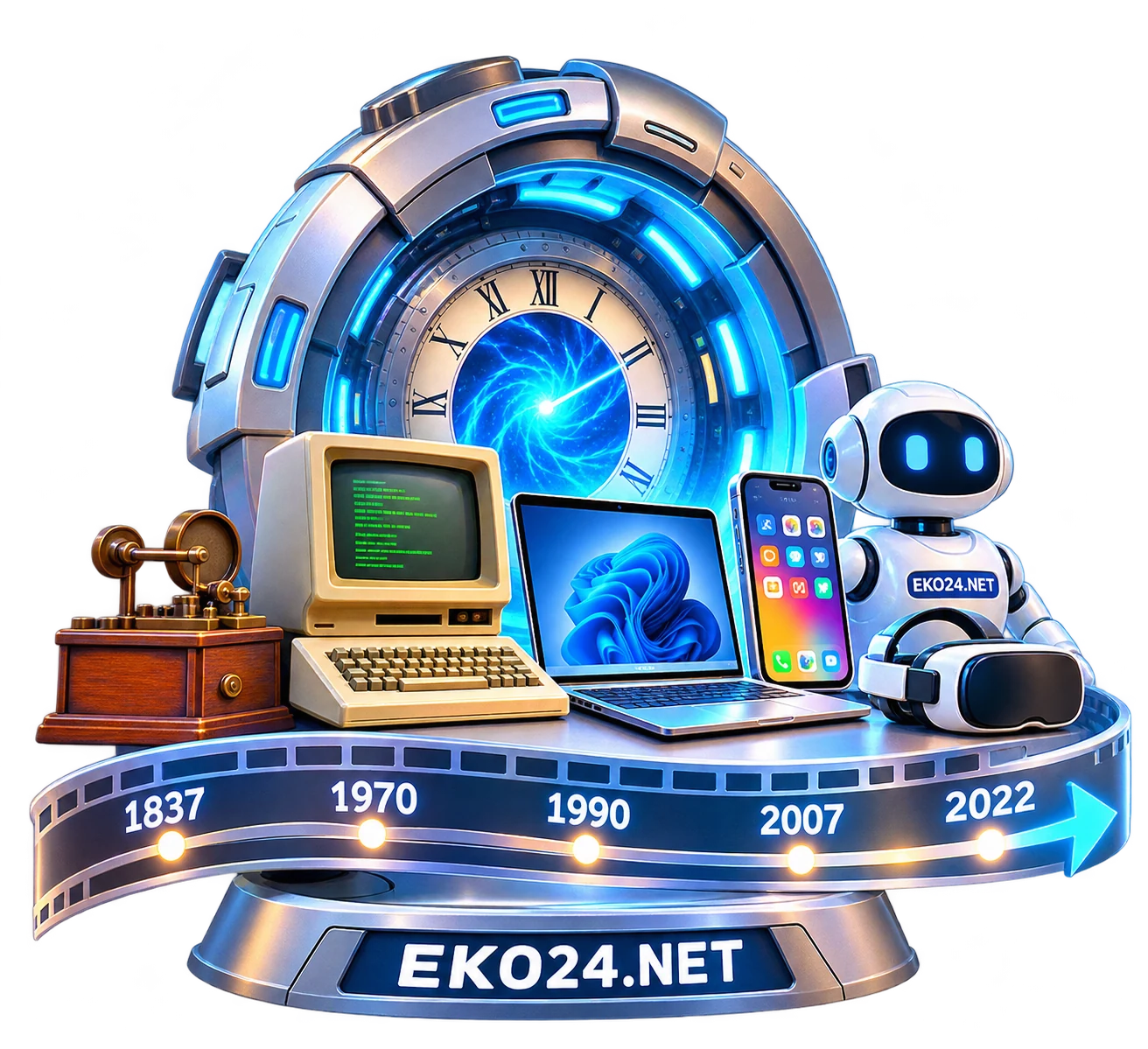
Explore 50 milestones in technology history from 1837 to 2025. Discover the evolution of computing, the internet, mobile phones and artificial intelligence. Search inventions, compare milestones and test your knowledge.
Milestones are selected historical highlights, not an exhaustive history.
Test your knowledge with 10 random questions about the timeline.
Explore the distribution of selected milestones, not the total number of inventions in history.
Move the slider to see only inventions that had happened by that year.
Choose two inventions from the timeline to compare their dates and historical significance.
Charles Babbage described a design for a programmable mechanical general-purpose computer. The machine was not completed in his lifetime.
computingAda Lovelace published notes on the Analytical Engine, including a procedure for calculating Bernoulli numbers.
computingPunched-card tabulators helped process the United States census.
computingAlan Turing described an abstract model of computation.
computingKonrad Zuse completed a programmable electromechanical digital computer.
computingENIAC, an early general-purpose electronic digital computer, was publicly unveiled in the United States.
computingBell Labs researchers developed the point-contact transistor, a foundation for modern electronics.
computingAlan Turing proposed an imitation game to explore machine intelligence.
aiA research workshop helped establish artificial intelligence as a field.
aiIBM released a pioneering high-level programming language.
computingJack Kilby demonstrated an early integrated circuit, helping pave the way for compact electronic devices.
computingBASIC made programming more accessible to students.
computingDouglas Engelbart demonstrated the mouse and interactive computing.
computingThe first ARPANET network connections helped establish foundations for packet-switched networking.
internetEarly UNIX development introduced influential operating system ideas.
computingRay Tomlinson developed a system for sending email between computers on ARPANET.
internetIntel introduced its commercial single-chip microprocessor.
computingC emerged at Bell Labs and became influential in systems programming.
computingMotorola engineer Martin Cooper made a public demonstration of a handheld cellular phone.
mobileResearchers at Xerox PARC developed early Ethernet networking.
internetThe Apple II became one of the influential early mass-market personal computers.
computingIBM introduced its Personal Computer, which influenced the wider PC industry.
computingARPANET transitioned to TCP/IP, an important milestone in the development of the Internet.
internetApple introduced the Macintosh with a graphical user interface.
computingMicrosoft released its first Windows graphical environment.
computingTim Berners-Lee proposed an information management system at CERN that became the World Wide Web.
internetThe Web became available to a wider community beyond its original research setting.
internetLinus Torvalds announced the project that became the Linux kernel.
computingThe first SMS text message was sent over a cellular network.
mobileMosaic helped popularise graphical browsing of the Web.
internetSun Microsystems introduced the Java programming language.
computingUSB introduced a common standard for connecting peripherals.
computingIBM’s Deep Blue defeated world chess champion Garry Kasparov in a six-game match.
aiThe first IEEE 802.11 wireless networking standard was published.
internetGoogle was founded to develop web search technology.
internetThe first Bluetooth specification defined short-range wireless communication.
mobileWikipedia launched as a collaboratively edited online encyclopedia.
internetFacebook began as a social networking website.
internetYouTube introduced an online video sharing platform.
internetAmazon introduced on-demand virtual computing capacity.
internetApple introduced the first iPhone, popularising a touchscreen-centred smartphone experience.
mobileThe HTC Dream / T-Mobile G1 became the first commercially available Android-powered smartphone.
mobileApple introduced its first iPad tablet.
mobileAlexNet demonstrated the power of deep neural networks in large-scale image recognition.
aiAlphaGo won a five-game Go match against Lee Sedol.
aiThe paper “Attention Is All You Need” introduced the Transformer architecture, influential in modern AI.
aiCommercial fifth-generation mobile networks began expanding in multiple countries.
mobileOpenAI released ChatGPT publicly, bringing conversational generative AI to a broad audience.
aiOpenAI released GPT-4, a model capable of processing text and image inputs.
aiDeepSeek released a reasoning model with publicly available model weights.
aiExplore how computing, internet communication, mobile devices and artificial intelligence evolved through selected historical milestones. Use the year slider and category filters to study different eras, compare two inventions to understand their chronological relationship, or test your knowledge with the interactive quiz.
The timeline covers selected events from 1837 to 2025 and is not an exhaustive catalogue of inventions.