AI writing tools have made it harder to tell whether a text was written by a person or generated by AI. This has also increased interest in AI detectors and AI humanizers, but the two tools serve very different purposes.
What Is an AI Detector?
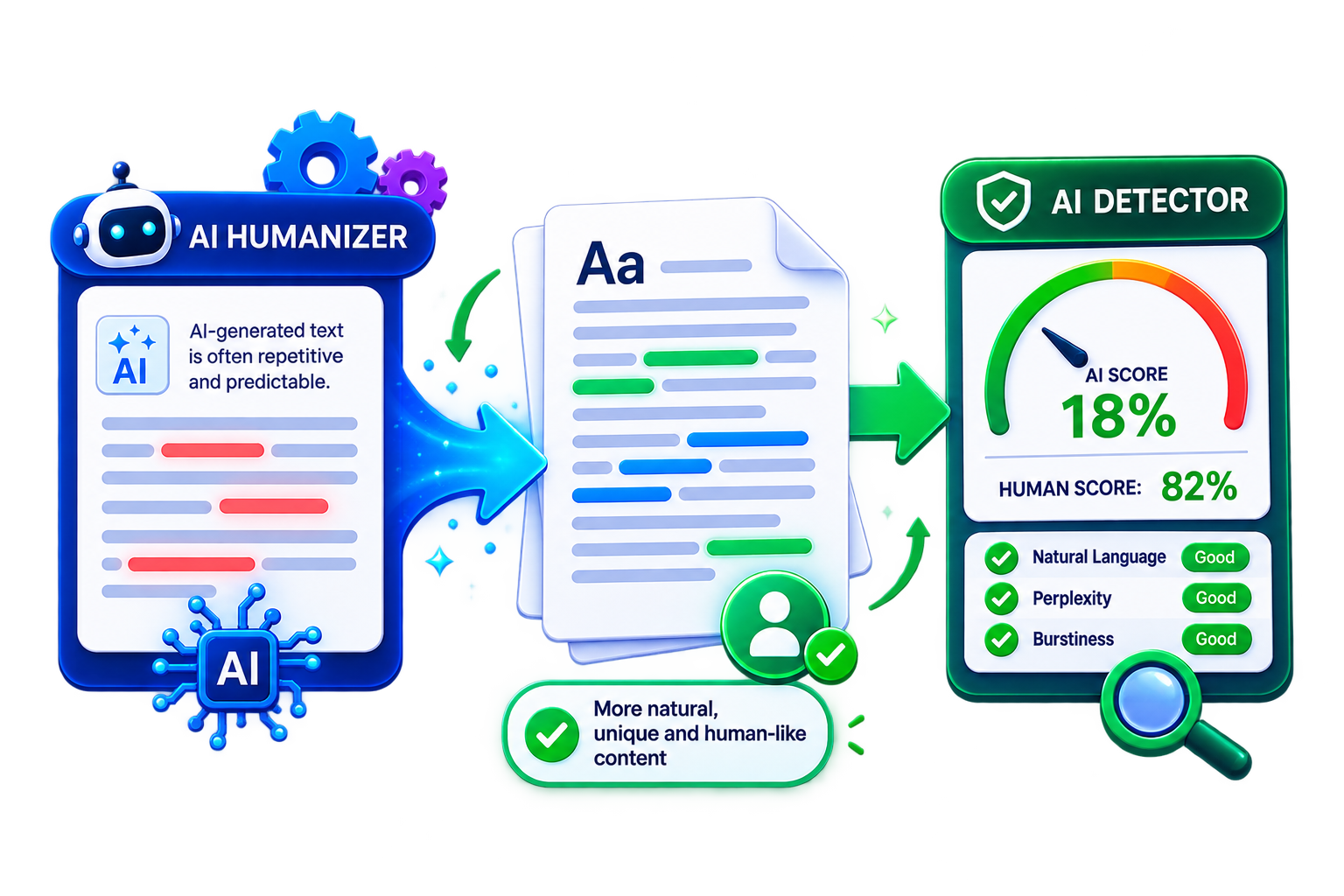
An AI detector analyzes patterns in text and estimates whether the content may have been generated by an AI system. The result is usually a probability or classification rather than absolute proof.
What Is an AI Humanizer?
An AI humanizer rewrites text to make it sound more natural and less repetitive. It may change sentence structure, vocabulary, and flow while keeping the original meaning.
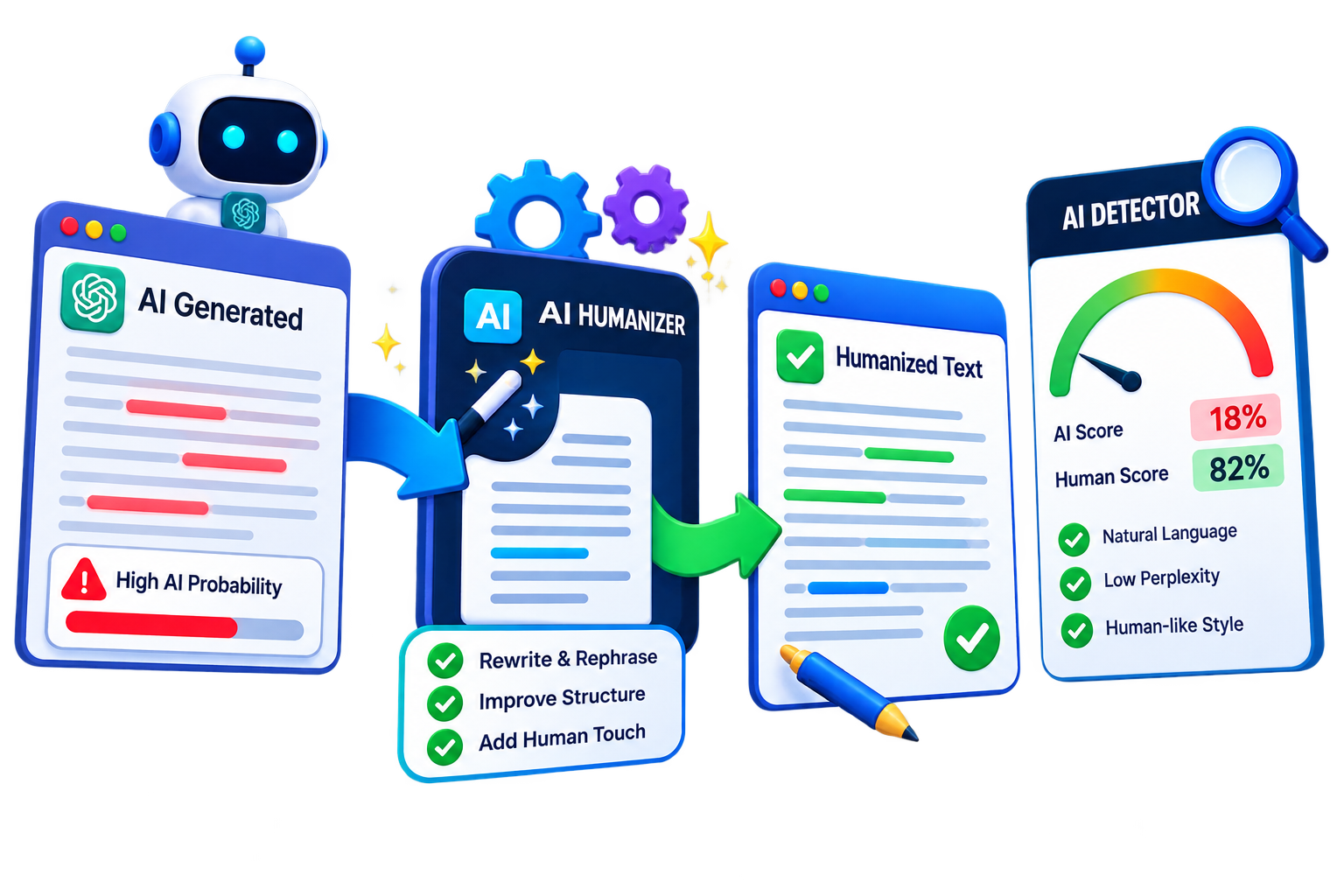
AI Humanizer vs AI Detector
The main difference is simple: a detector analyzes writing patterns, while a humanizer changes them. Neither process can determine authorship with complete certainty.
Are AI Detectors Always Accurate?
No. Detection tools can produce false positives or different results for the same text. Their scores should be treated as estimates rather than definitive evidence of who or what wrote a document.
Use AI Content Tools Carefully
AI analysis can be useful for reviewing writing patterns, but context and human judgment still matter. Detection scores alone should not be used to make important decisions about authorship.
Why detector scores are not proof
AI detectors estimate patterns in text; they cannot reliably establish who wrote a passage. Editing text to sound more natural may change a detector score without changing the underlying facts or originality. The better test is whether the writing is accurate, specific, appropriately sourced and genuinely useful to the reader. Follow any disclosure rules that apply to your school, employer or publisher.
Related Guides on EKO24.NET
For more context, read How to Humanize AI Content for Scripts and Articles. You can also explore 7 AI Tools That Save Content Creators Hours in 2026 for another practical perspective on this topic.
AI detection is not proof of authorship
A detector score is not a verified record of how a document was produced. False positives and false negatives are possible, so do not accuse a person of misconduct on the basis of a score alone. For YouTube videos, AI-writing assistance for an outline or script does not itself require an AI disclosure; YouTube does require disclosure for certain realistic, meaningfully altered or generated content. See YouTube Help: Disclosing use of GenAI content. These platform disclosure rules are separate from school or workplace policies.